We reimagined the Calm App with new features and a modern meditative design with the goal to make wellness more approachable and personal. Mental health and wellbeing take a spotlight during our stressful current events, where doomscrolling and devastating news takes a toll. From conception to development, we utilized Design Thinking and UX methodologies, and prioritized human centered design.
Jan 2024 – May 2024
Figma, Miro, Adobe CC
Natalie Leriche
UX/UI & Motion Designer
Ava Ligouri
UX Designer
Malak Morsi
UX Designer
View recognition


Overview
Challenge
With current events of hate, corruption, and devastation, our screen-time takes a toll on mental health and further isolates us from the world.
Solution
Foster an encouraging environment that eases users into exploring wellness, optimized with personalization and joining communities.
Discover, Define, and Ideate
Discover
We focused on understanding users and the problem space through exploratory research. Utilizing UX methods, we gathered qualitative and quantitative insights to uncover user behaviors and needs. This grounded the project in real-world context and informed evidence-based design decisions.
Methods Used:
Desktop Research
Value Proposition
Market Segmentation
Competitive Analysis
Heuristic Evaluation
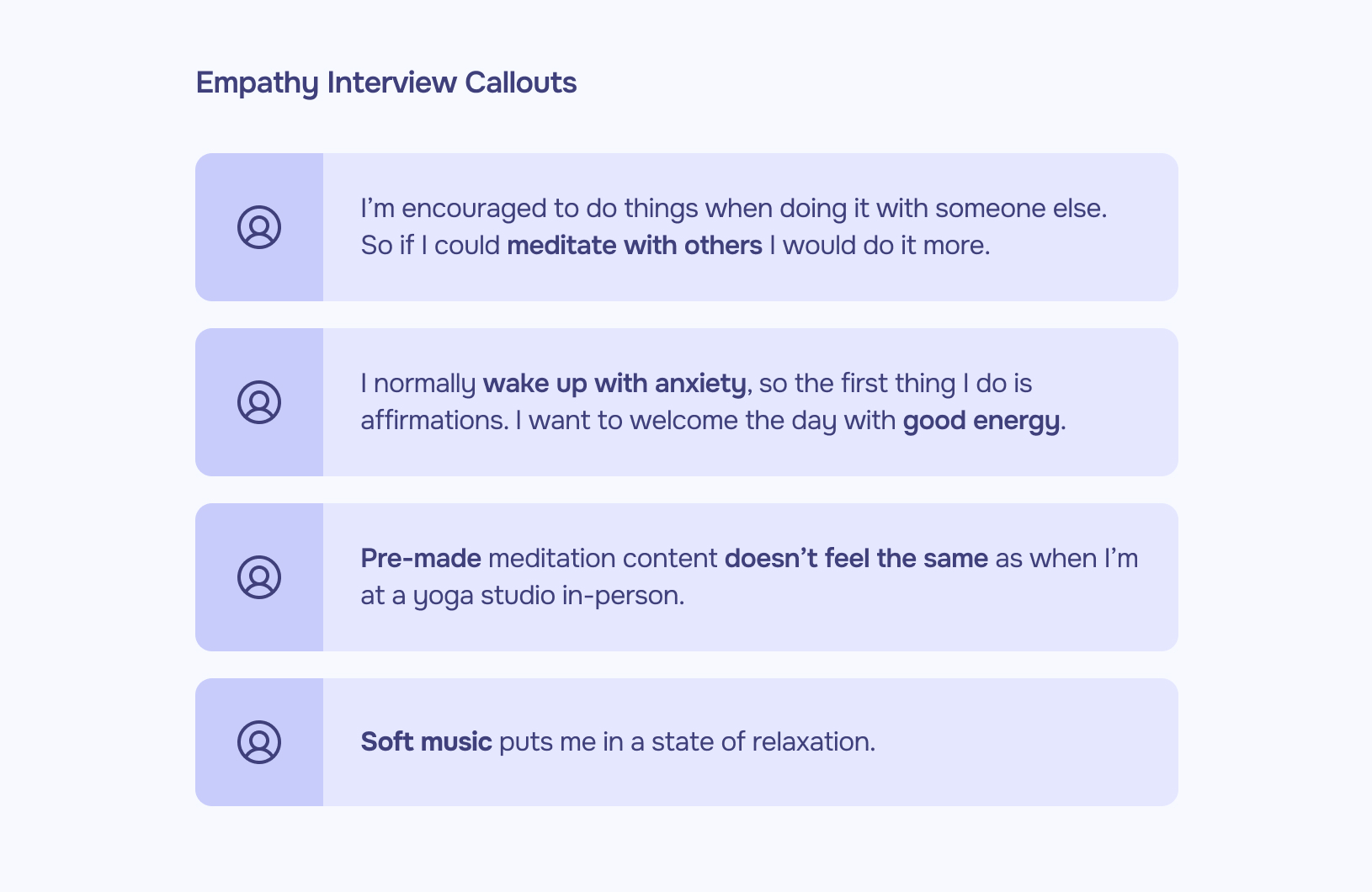
Empathy Interviews
Define
We focused on understanding users and the problem space through exploratory research. Utilizing UX methods, we gathered qualitative and quantitative insights to uncover user behaviors and needs. This grounded the project in real-world context and informed evidence-based design decisions.
Methods Used:
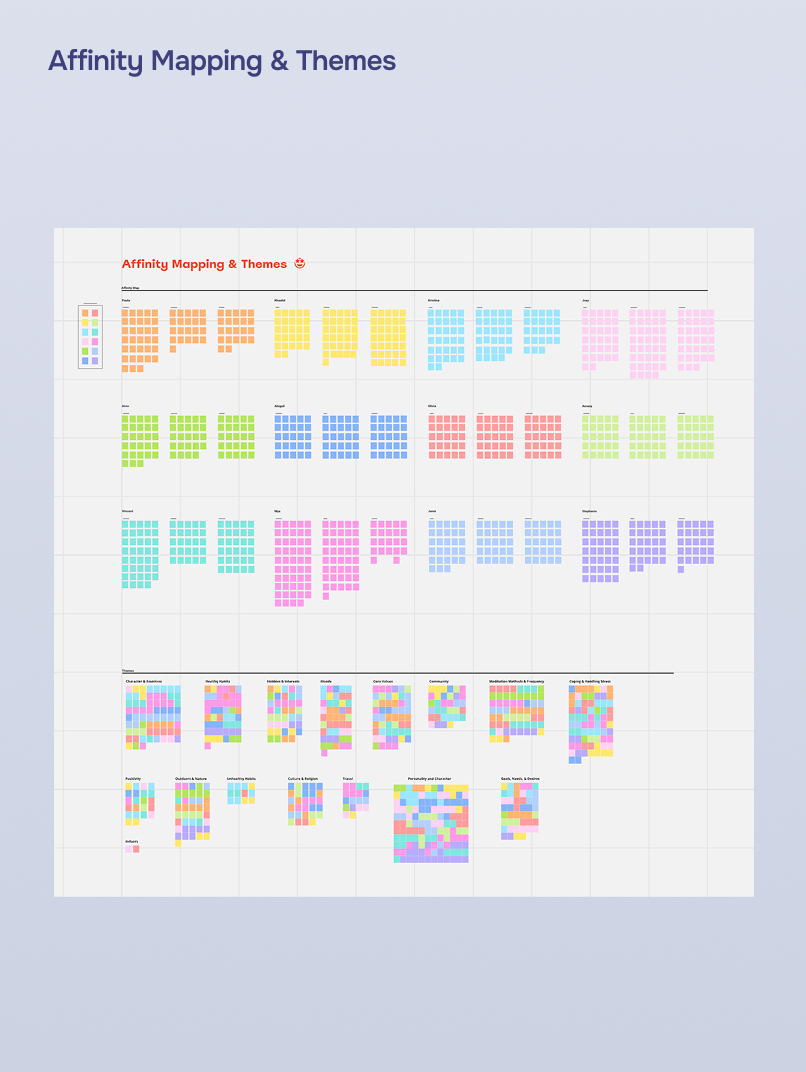
Affinity Map & Themes
Empathy Map
Journey Mapping
Personas

Ideate
We translated research insights into actionable concepts by exploring and brainstorming a wide range of solutions. Through collaboratively talking out our solutions, we challenged assumptions and prioritized ideas based on user needs, feasibility, and impact. This stage helped narrow broad possibilities into focused design directions that informed prototyping and testing.
Methods Used:
Problem Statement (POV)
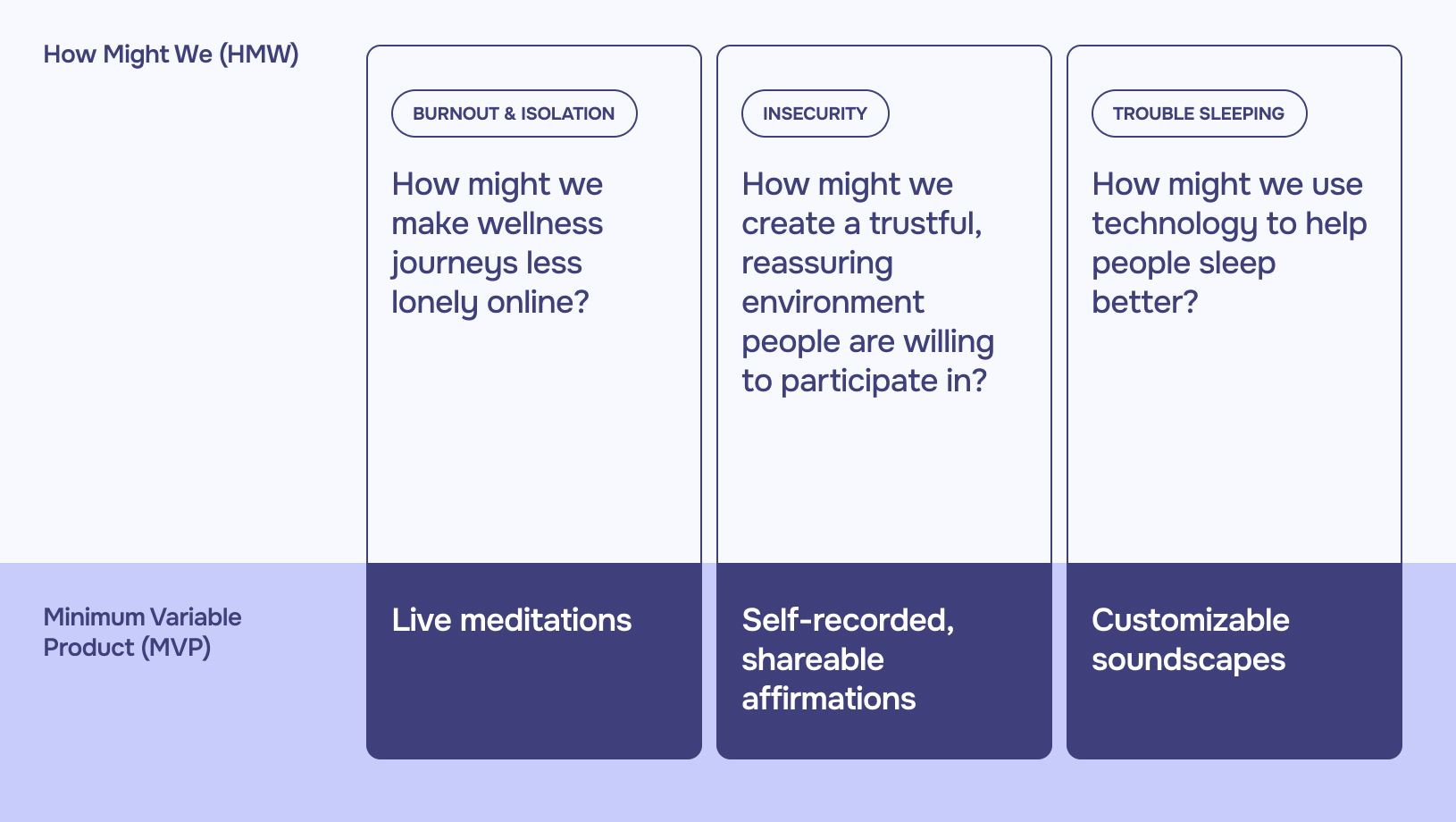
How Might We (HMW)
Minimum Variable Product (MVP)
Design and Development
Intuitive Structure and Ease of Use
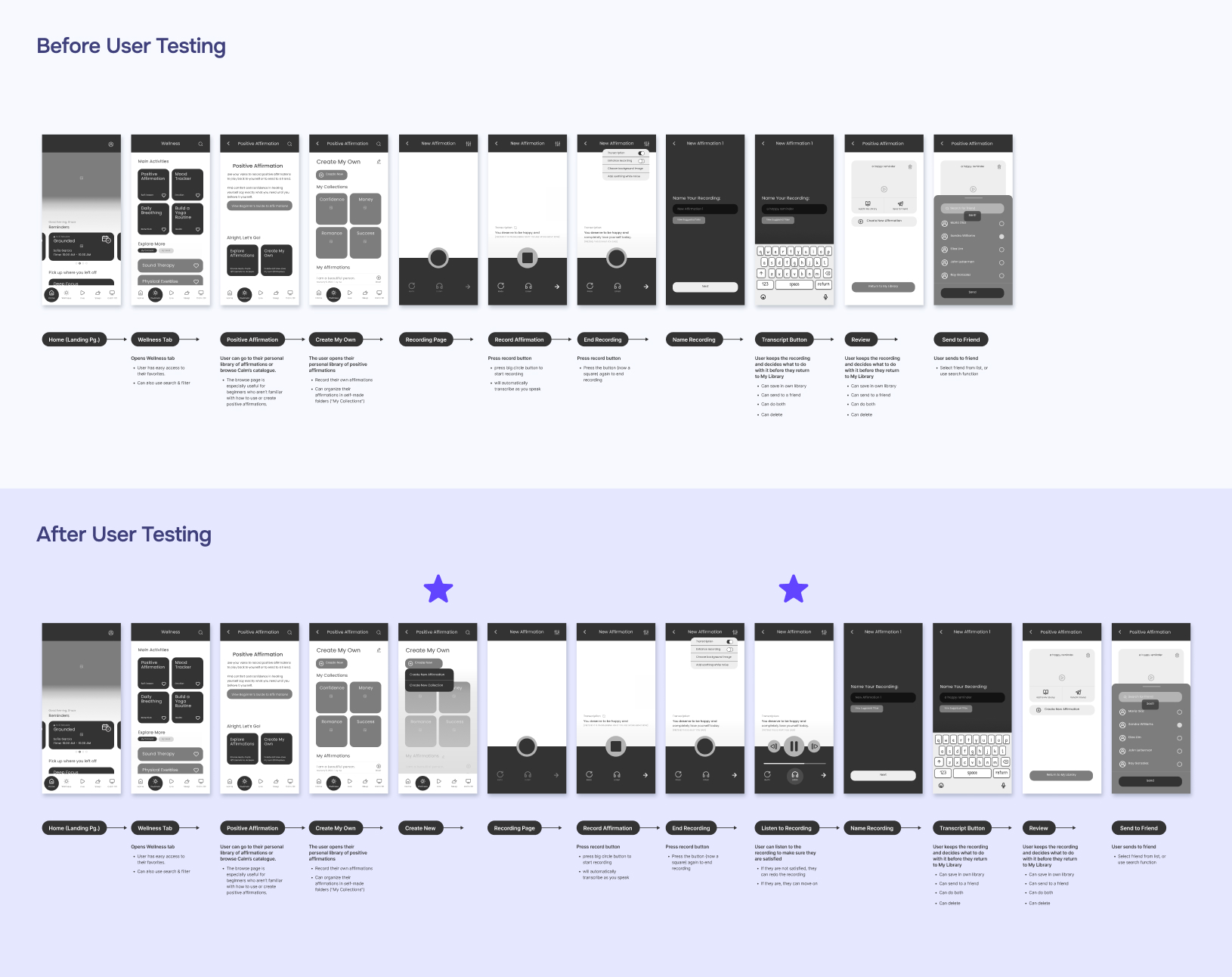
To ensure a seamless and user-friendly experience, we prioritized the user. After creating wireframes, and rapid prototyping them, we conducted user testing and implemented feedback from the testing results to improve the usability of our product.
Methods Used:
Content Mapping
User Flow
Rapid Prototyping
Wireframing
Testing & Iteration
User Testing
Deliver
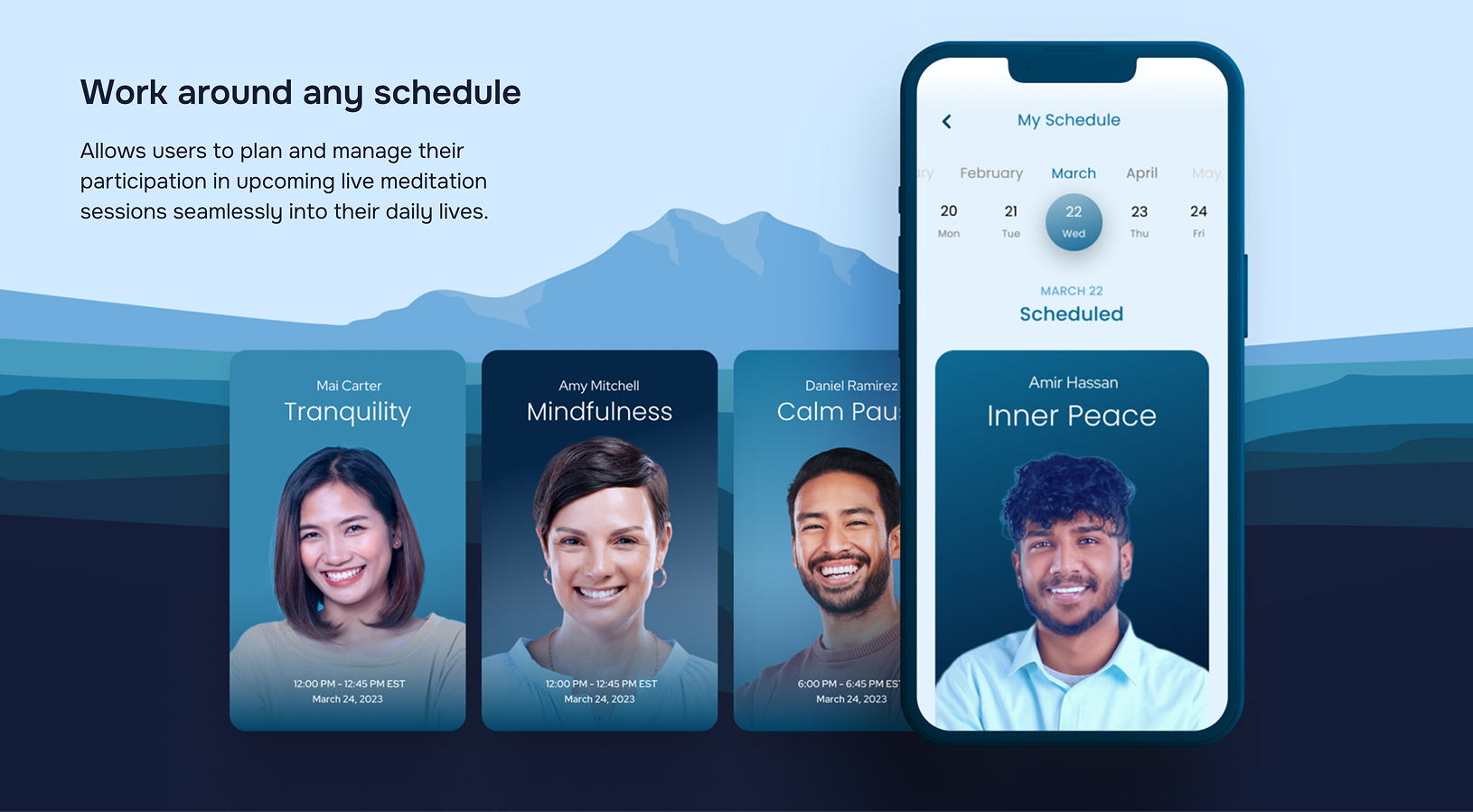
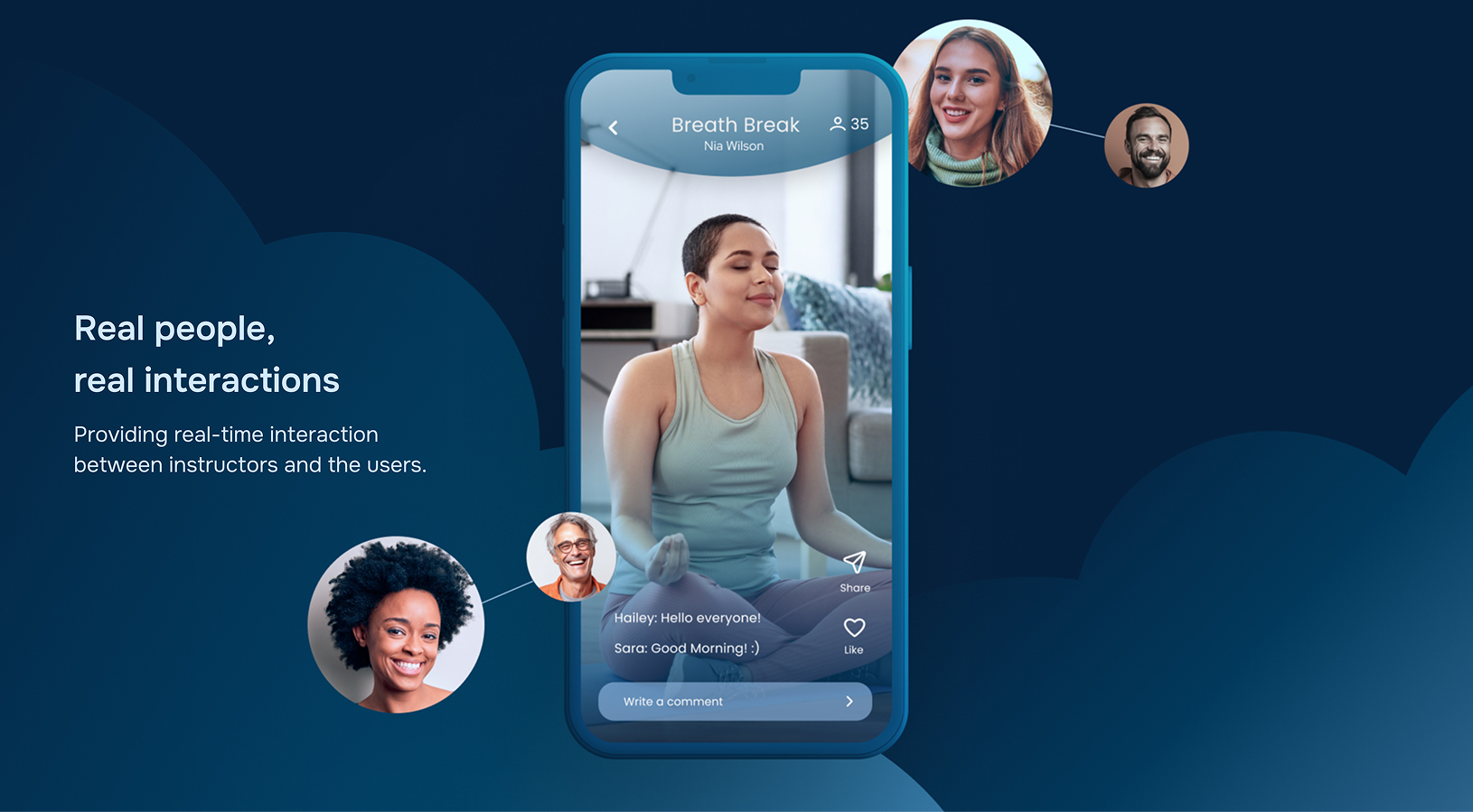
Feature 1: Live Meditation
Guided meditations with instructors for real-time interactions. Pick from a variety of sessions led by experienced meditation instructors.
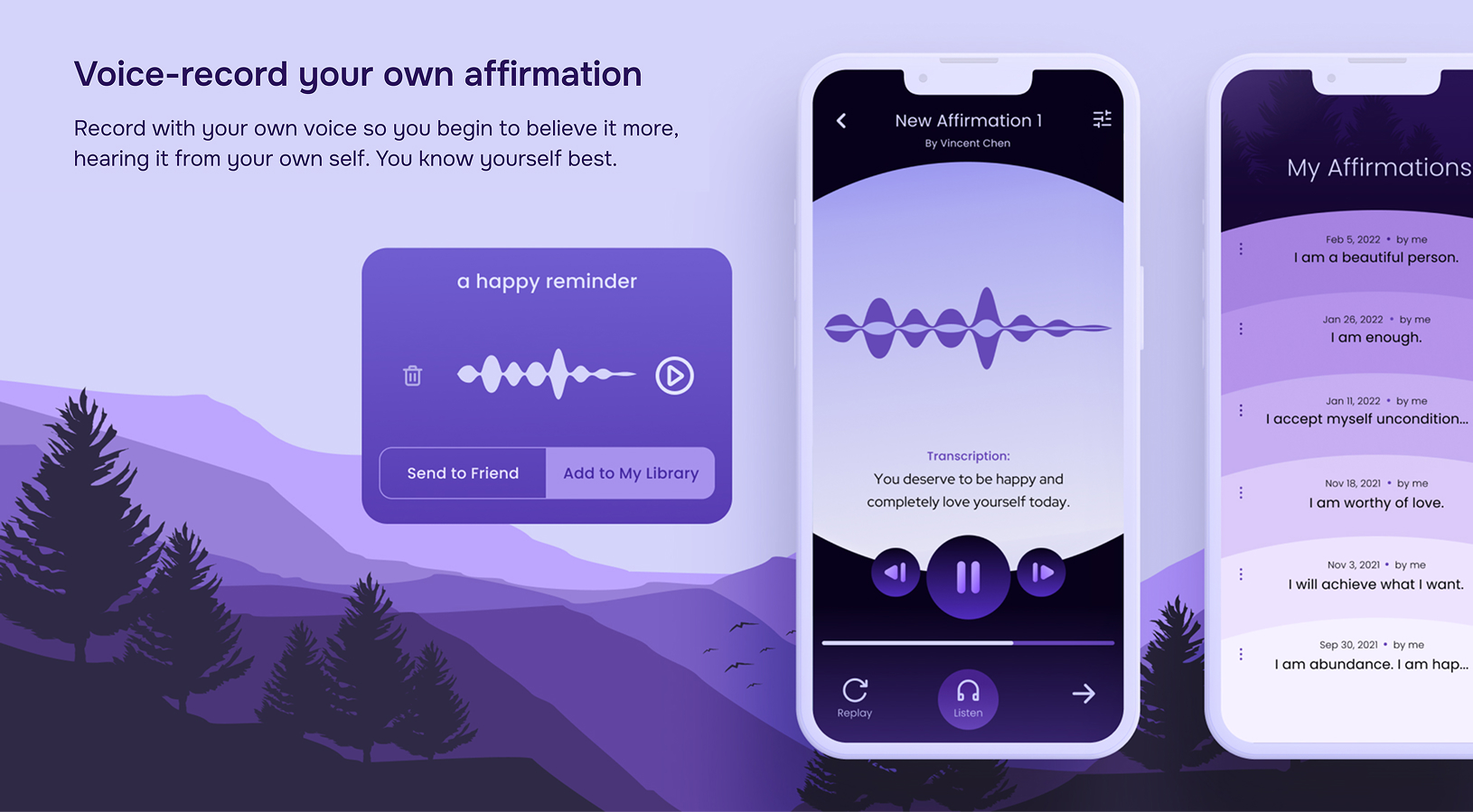
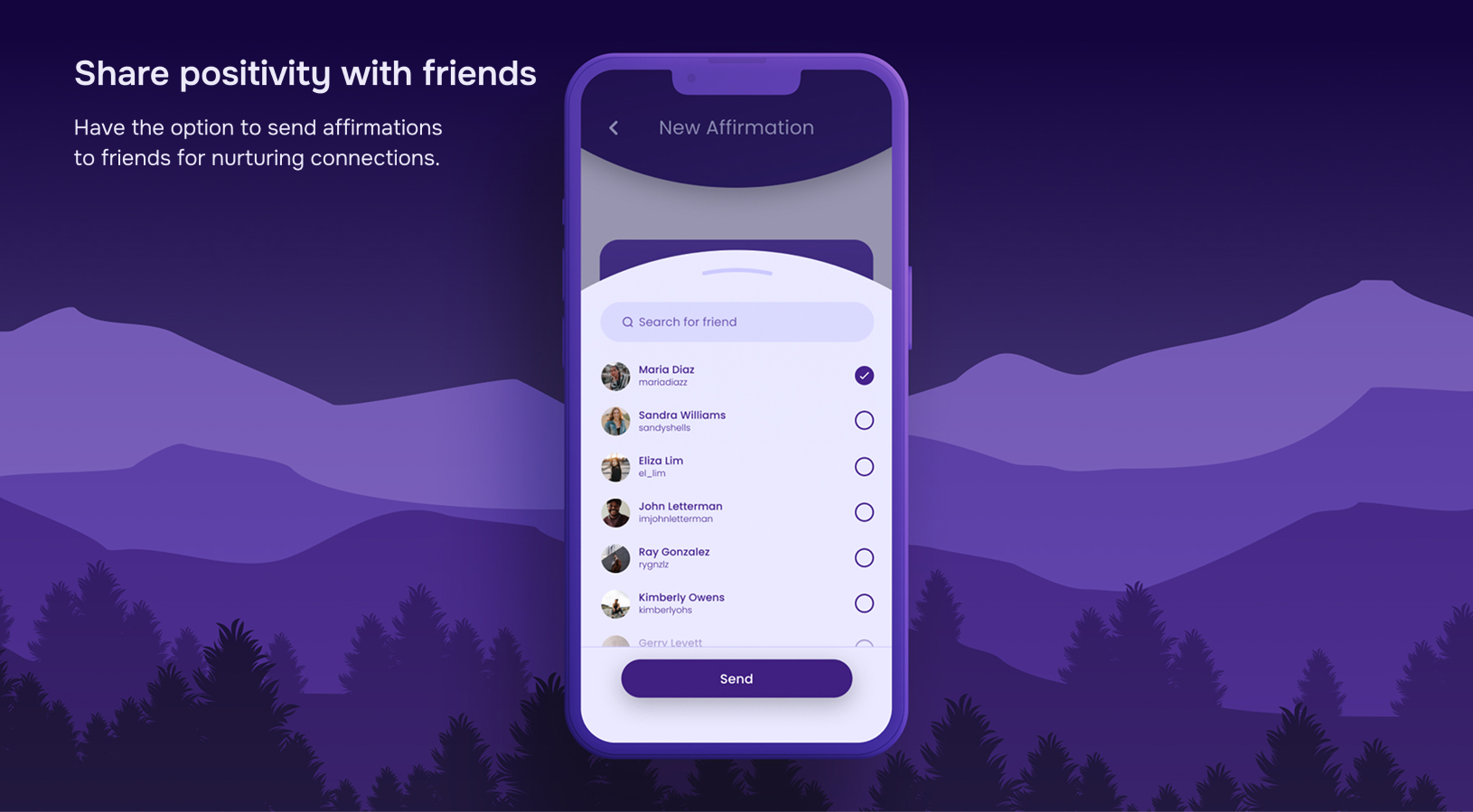
Feature 2: Self-recorded, Shareable Affirmations
Record positive affirmations with your own voice to play back for yourself or to send to a friend.
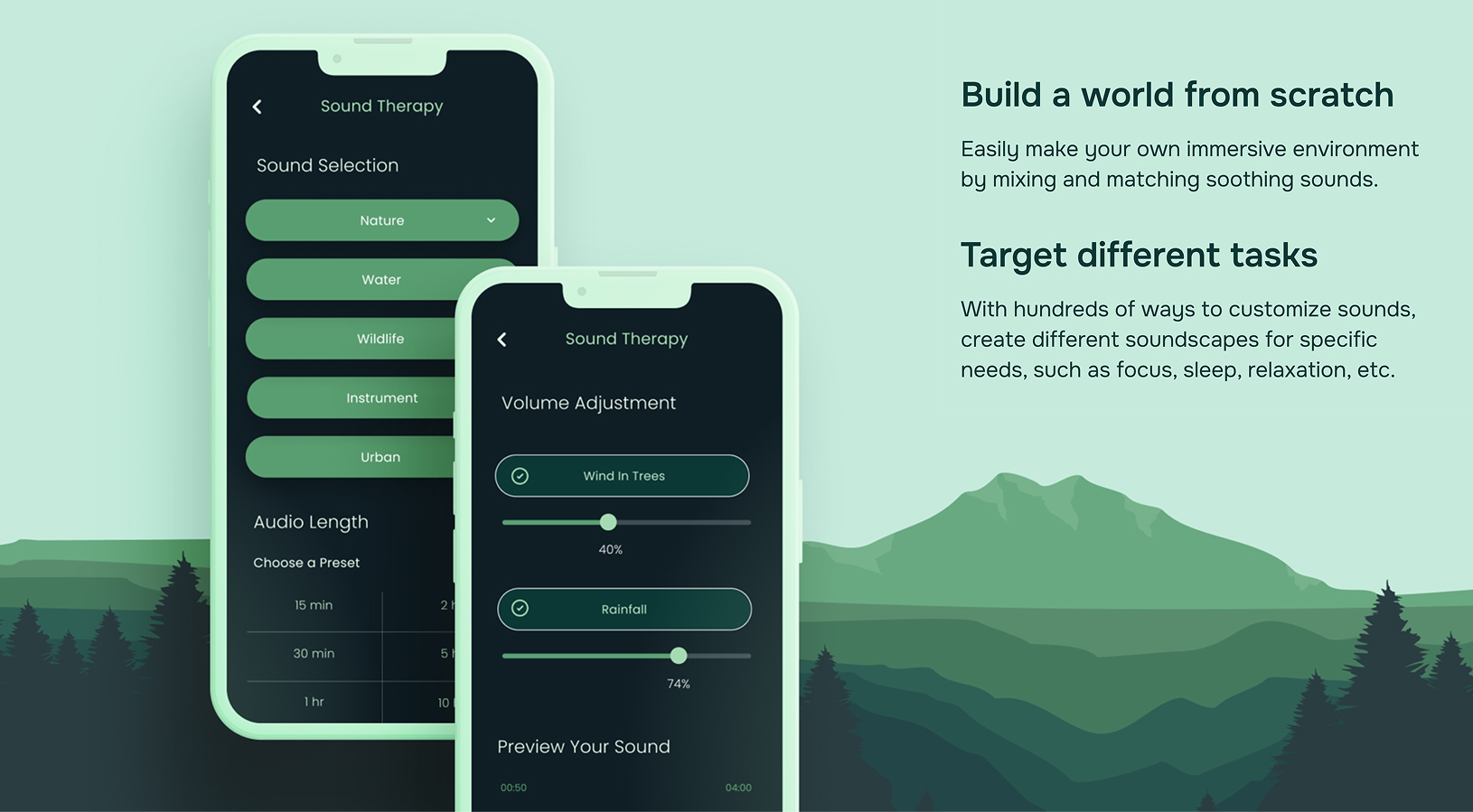
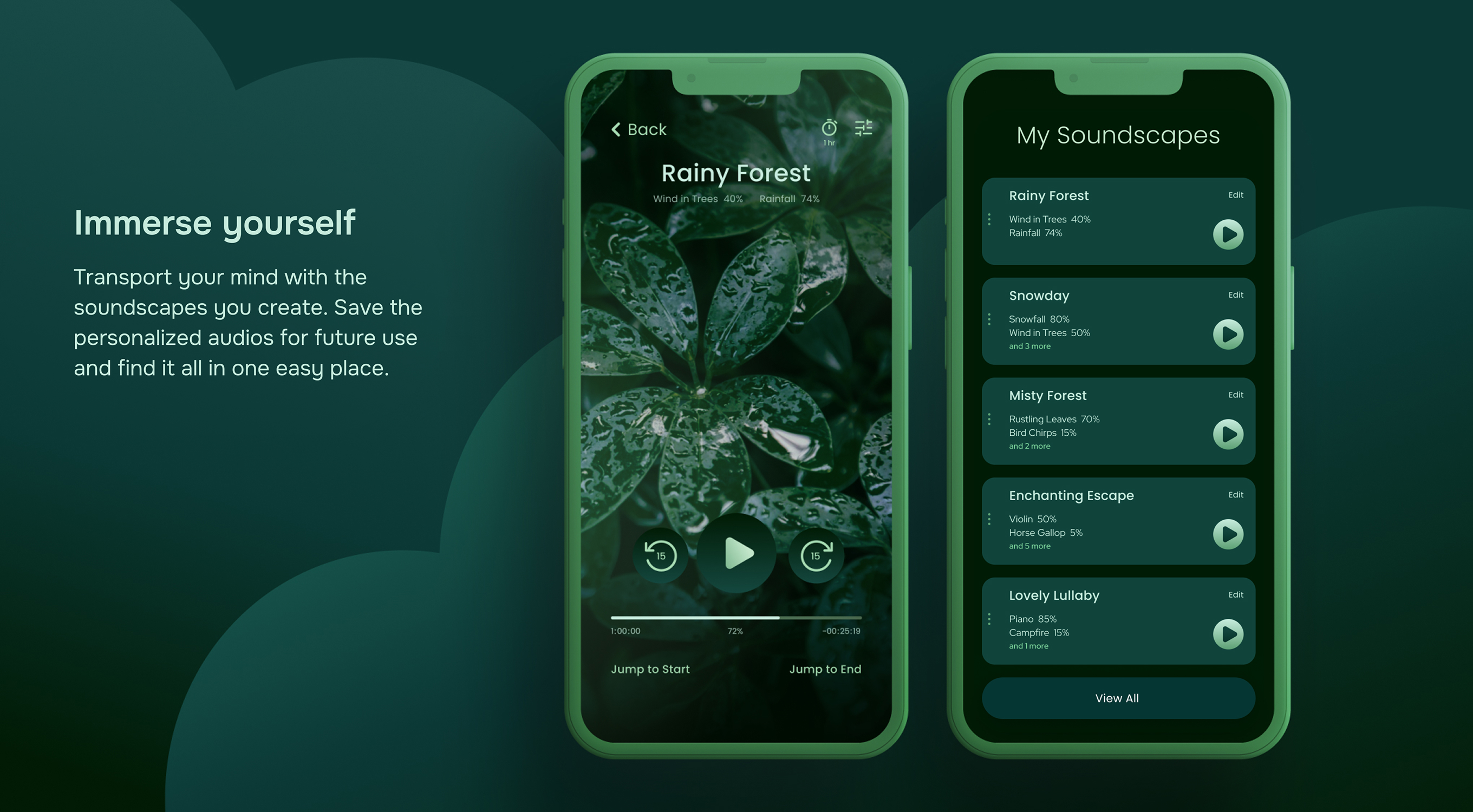
Feature 3: Customizable Soundscapes
Soundscapes allow the user to tune out background noises and focus on getting a restful sleep. Make immersive sound environments tailored to your preferences.
Design System
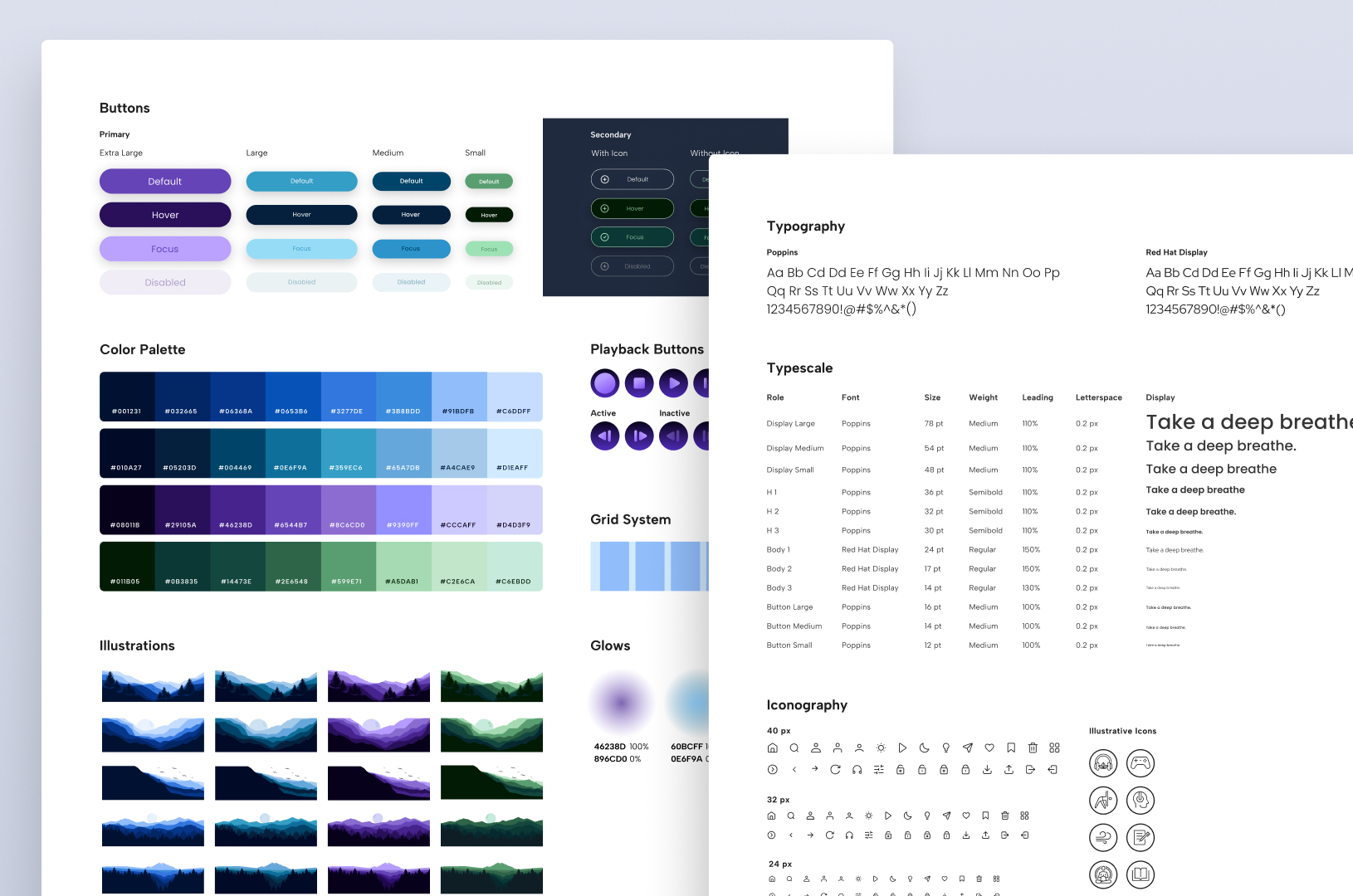
A centralized library of icons, illustrations, button styles, colors, and type-scale. Providing consistency, efficiency, and scalability across all destinations of the Calm App.
Key Takeaways
Infusing Personalization and Community
This Calm App reimagining fosters a sense of togetherness with an open community to fall back to. Whereas beforehand, Calm felt detached. Wellness is now more personalized, able to adjust to the user's specific wants and preferences.
Next Steps
Add a featured “Happening Now” section for live meditation sessions active at the very moment. Expand on the community aspect of sharing positive affirmations. How does one find and make friends in the app?